

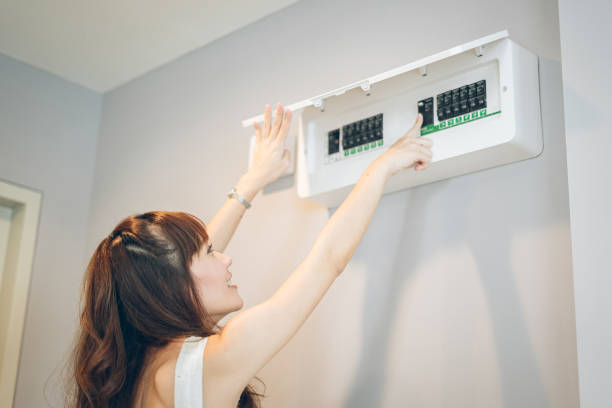
The air conditioner starts up, runs for a moment, and then everything suddenly shuts down. A quick trip to the electrical panel reveals the culprit: the AC breaker has tripped again. Resetting it may get the system running temporarily, but if the breaker continues to trip every time the air conditioner turns on, it is warning you that something is wrong.
Circuit breakers are designed to protect your home from electrical overloads and overheating. When an air conditioner draws more power than it should, the breaker cuts power before wires, components, or surrounding materials can become dangerous.
According to the U.S. Fire Administration, thousands of residential fires each year are linked to air conditioning equipment, making repeated breaker trips a problem that should never be ignored.
The cause can range from a dirty air filter and failing capacitor to a compressor problem or electrical fault. In this blog, we’ll explain the most common reasons an AC trips the circuit breaker when it starts, what you can safely check yourself, and when it’s time to call a professional before a small issue becomes a major repair.
Key takeaways:
- A breaker that trips when your AC starts is a safety device cutting power to a system drawing too much current.
- The most common cause is a failed capacitor that forces the compressor to pull excess amps at startup.
- A grounded compressor trips the breaker instantly and is a serious, costly repair.
- Never repeatedly reset a tripping breaker, since it points to an electrical fault and a fire risk.
- Most causes involve electrical parts that require a licensed technician to diagnose safely.
Why Does My AC Keep Tripping the Circuit Breaker?
Your AC trips the circuit breaker because it is drawing more electrical current than the circuit can safely handle, usually right at startup when the compressor pulls the most power. Common causes include a failed capacitor, a dirty coil or filter, a grounded compressor, a failing motor, loose wiring, or a weak breaker.
The timing tells the story. Starting the compressor takes a large surge of current, far more than the system uses while running, so any weakness shows up at that exact moment. A healthy circuit handles that surge with room to spare.
When a part is failing or a connection is bad, the draw spikes past the breaker’s limit, and the breaker shuts the power off to protect your wiring and your home. Finding what is causing that spike is the only safe fix.
Why You Should Never Keep Resetting the Breaker
Resetting a tripping breaker over and over is dangerous, not just annoying. The breaker trips because it senses a current overload or a short, and each reset forces that overload through your wiring again. That repeated stress can overheat the wires, damage the compressor beyond repair, and in the worst case start an electrical fire.
Reset the breaker one time to confirm the trip. If it trips again right away, leave it off and call a professional. A breaker that will not stay on is telling you something in the system has failed, and continuing to force it only raises the risk and the eventual repair cost.
Why Your AC Keeps Tripping the Breaker
Most of these problems are electrical and trace back to the outdoor unit. A couple you can rule out yourself, but the rest need a technician with the right meters and training. Reading through them helps you understand what is overloading the circuit.
1. A Failed or Weak Capacitor
A bad capacitor is the most common reason an AC trips the breaker at startup. The capacitor delivers the jolt of energy the compressor and fan need to start, and when it weakens, the motor strains and pulls far more current than normal to get going. That current spike trips the breaker, often after a few seconds and a loud hum from the unit. A capacitor is a common repair, and a technician can test and replace it quickly.
2. A Dirty Air Filter or Condenser Coil
A system choked by a dirty filter or a grimy condenser coil has to work much harder to move heat, and that extra effort raises its electrical draw. The compressor runs hotter and pulls more amps, which can push the circuit past its limit and trip the breaker. Keeping the filter fresh and the outdoor coil clean lowers the strain, though a heavy buildup on the coil needs a professional cleaning to fully restore airflow.
3. A Grounded or Failing Compressor
When the breaker trips instantly the moment you reset it, the cause is often a grounded compressor. This happens when the electrical windings inside the compressor break down and short to ground, creating a dead short that trips the breaker at once. A grounded compressor is one of the most serious AC failures and usually means the compressor needs replacement. Only a licensed technician can confirm it with proper testing.
4. A Failing Fan or Blower Motor
Motors that are wearing out draw more current as their bearings seize or their windings degrade. A struggling condenser fan motor or indoor blower motor can pull enough extra amperage to trip the breaker, especially at startup. You might hear grinding or humming from the unit before it cuts out. A technician can measure the motor’s draw and replace it before it damages other parts.
5. Loose or Damaged Electrical Wiring
Loose connections, corroded terminals, and damaged wiring create resistance and heat that can trip a breaker or cause a short. Years of vibration, weather, and pests can all loosen or chew through the electrical connections in an outdoor unit. This is strictly a job for a professional, since working on live electrical components without training risks shock and further damage.
6. A Weak or Worn Circuit Breaker
Sometimes the breaker itself is the culprit. Breakers wear out over time, and a weak one can trip below its rated load even when the AC is healthy. An undersized or aging breaker may also have been mismatched to the system during a past repair. A technician or electrician can test the breaker and confirm whether it needs replacing, rather than assuming the AC is at fault.
What You Can Safely Check Yourself
A couple of safe checks can rule out the simplest causes before you call. Replace a dirty air filter, since restricted airflow makes the system work harder and draw more current. Clear leaves and debris from around the outdoor unit so it can shed heat properly. You can also reset the breaker one single time to confirm whether it holds.
Beyond that, the work belongs to a professional. Do not open the electrical panel of the AC, touch the capacitor, or attempt any wiring repair, since those carry serious shock and fire risks and require proper tools. If the breaker trips again after one reset, stop and call a technician rather than forcing it.
When to Call an HVAC Professional in DFW
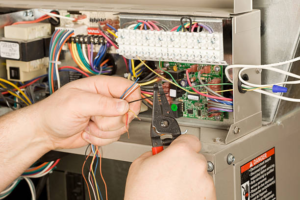
Call a professional the moment your breaker trips a second time, when it trips instantly on reset, or when you smell burning or see scorch marks near the unit or panel. Those point to an electrical fault that is unsafe to ignore and impossible to fix without training and the right equipment.
This is where TexAire Heating & Air Conditioning comes in. Our licensed technicians measure the system’s amp draw, test the capacitor, compressor, motors, and wiring, and pinpoint exactly what is overloading the circuit before any work begins.
We provide fast AC repair across the Lewisville, Dallas and Fort Worth area, with the meters and training to handle electrical faults safely. TexAire Heating & Air Conditioning serves homeowners throughout the DFW Metroplex with honest diagnostics and dependable workmanship, so a tripping breaker gets solved at the source instead of reset until something burns.
Solving a Tripping Breaker Before It Becomes a Bigger Problem
An AC that trips the circuit breaker every time it turns on is sending an electrical warning you should not silence by resetting it.
Most of the time the cause is a failed capacitor, a dirty system pulling extra current, a worn motor, or a wiring fault, and a few are serious enough to threaten your compressor or your home. The safe move is to reset once, run the basic checks, and call a professional the moment the breaker trips again.
Staying current on routine AC maintenance keeps the electrical parts clean, tight, and within their normal draw so these trips rarely start.
If your AC keeps tripping the breaker, let TexAire Heating & Air Conditioning find the cause and fix it safely. Call us at 469-213-7730, and our team will diagnose the electrical fault and get your AC running safely across your DFW home.
FAQs
Why does my AC trip the breaker every time it turns on?
Your AC trips the breaker at startup because the compressor pulls a large surge of current, and a failing part makes that surge exceed the circuit’s limit. Common causes are a bad capacitor, a dirty coil, a grounded compressor, a worn motor, or loose wiring.
Is it safe to keep resetting my AC breaker?
No. Repeatedly resetting a tripping breaker forces an electrical overload through your wiring again and again, which can overheat the wires, ruin the compressor, or start a fire. Reset it once to confirm, and if it trips again, leave it off and call a technician.
Can a bad capacitor cause my AC to trip the breaker?
Yes. A weak capacitor forces the compressor and fan to strain and draw far more current than normal to start, which trips the breaker, usually after a few seconds and a loud hum. Replacing the capacitor is a common and relatively affordable repair.
Why does my breaker trip instantly when I reset it?
An instant trip on reset often means a grounded compressor, where the internal windings have shorted to ground and created a dead short. This is a serious failure that usually requires compressor replacement, and only a licensed technician can confirm it with proper testing.
Could a dirty AC unit cause the breaker to trip?
Yes. A dirty filter or condenser coil forces the system to work harder and draw more current to move heat, which can push the circuit past its limit and trip the breaker. Cleaning the coil and changing the filter reduces the strain and the electrical draw.