

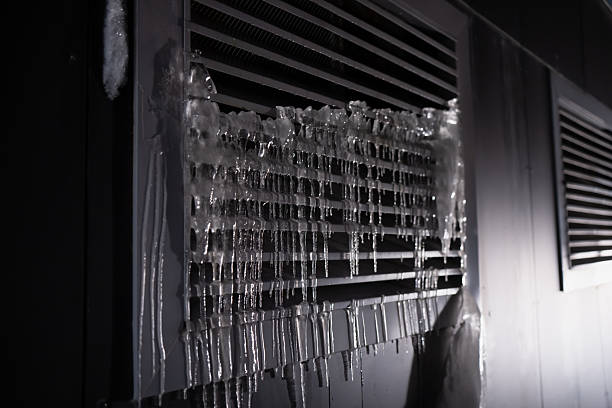
An air conditioner freezing up at night usually points to an airflow or refrigerant problem that becomes more noticeable once outdoor temperatures drop. The system may run normally during the day, then suddenly develop ice buildup overnight as the evaporator coil gets too cold and moisture in the air begins freezing across the coil surface. In some cases, the AC may continue running while blowing weak or warm air. Other times, the system may shut down completely by morning.
Some freezing problems can be resolved with simple airflow improvements and basic maintenance. Others may indicate refrigerant leaks or failing HVAC components that require professional diagnosis before compressor damage or larger system failures occur.
In this guide, we’ll explain the most common reasons an AC freezes at night, including dirty air filters, blocked return vents, low refrigerant levels, blower motor problems, thermostat settings, and nighttime temperature conditions that affect how the cooling system operates after several continuous hours of runtime.
Key Takeaways
- AC systems commonly freeze at night when airflow drops or evaporator coil temperatures become excessively cold.
- Dirty air filters and blocked return vents restrict airflow, allowing moisture to freeze across the evaporator coil.
- Low refrigerant levels often cause nighttime freezing by lowering pressure and reducing normal coil operating temperatures.
- Weak airflow from failing blower motors can prevent warm indoor air from properly circulating through the system.
- Repeated ice buildup usually requires professional HVAC inspection to prevent compressor damage and expensive system repairs.
Why Your AC Freezes at Night When It Works During the Day
Your evaporator coil is designed to be cold. That’s its job. But it’s only supposed to be cold enough to cool your home without ice forming on it. Normally, the warm air from your home passes over the coil, the coil absorbs that heat, and the coil stays at a safe temperature between 32 and 55 degrees.
At night, everything changes. The outside temperature drops. Your home needs less cooling because fewer people are awake, fewer lights are on, and less heat is being generated inside. With less heat available to absorb, the evaporator coil has nothing to do.
It continues running at full capacity but finds almost no heat to absorb. The coil temperature plummets below 32 degrees. Water vapor in the air passing over the coil begins freezing instead of condensing. Ice accumulates on the coil surface.
This is different from a daytime failure. During the day, your AC might not cool enough because of a specific problem like low refrigerant or a clogged filter. But freezing at night happens because the system is running, your home simply needs less cooling, and the coil gets too cold with nothing to do.
Understanding this is crucial. It means some nighttime freezing solutions are completely different from daytime cooling solutions.
The 7 Most Common Reasons Your AC Freezes at Night
1. Dirty or Clogged Air Filter
Your air filter’s job is to let air flow through your system while blocking dust and dirt. When the filter gets clogged, airflow becomes restricted. Without enough warm air flowing over the evaporator coil, the coil can’t absorb heat properly. Pressure in the system drops. The coil temperature falls below freezing.
At night, this problem gets worse. During the day, your home generates heat from sunlight, appliances, and people moving around. At night, there’s almost no heat being generated. A clogged filter combined with minimal nighttime heat creates the perfect conditions for freezing.
Check your air filter now. If it’s gray, brown, or so caked with dust that you can barely see light through it, replace it immediately. Many homeowners change their filter once every three months. In dusty environments or during heavy cooling seasons, your filter might need replacement every two to three weeks. A clean filter is your first defense against nighttime freezing.
2. Blocked or Closed Return Air Vents
Your return air vents are the openings where air gets pulled back into your system to be cooled again. If these vents are blocked by furniture, curtains, closed doors, or boxes, airflow to the indoor unit becomes restricted.
This creates the same problem as a dirty filter. Without enough warm air reaching the evaporator coil, the coil can’t stay at a safe temperature. The problem intensifies at night when your home is already generating minimal heat.
Walk through your home and look at your return air vents. Check the main return, but also look for additional returns in bedrooms or other rooms. Make sure nothing is blocking them. Furniture should be at least 12 inches away from a return vent. Doors should be open to allow air circulation through your entire home. Even a partially closed bedroom door can restrict nighttime airflow enough to cause freezing.
3. Frozen Evaporator Coil (From Another Problem)
Sometimes your coil is frozen not because of nighttime conditions alone, but because another issue is causing the problem. Low refrigerant, a failing compressor, or a malfunctioning thermostatic expansion valve can all cause the coil to freeze regardless of the time of day.
When your evaporator coil freezes solid, ice insulates the coil and makes heat absorption impossible. Your system keeps running, but no cooling happens. The compressor works continuously trying to cool air that won’t cool. This damages the compressor.
If your coil is visibly frozen with ice buildup, stop running your system immediately. Turn it off and let the ice melt naturally for 2 to 3 hours. While it’s melting, call TexAire for AC repair. Don’t run the system again until a technician has diagnosed what caused the freezing.
4. Blower Motor Problem or Low Blower Speed
Your blower motor is the fan inside your indoor unit. It pushes air through the coil and into your home. If the blower is running slowly or not at all, airflow across the evaporator coil becomes restricted. The coil can’t absorb enough heat and temperatures drop below freezing.
Some thermostats have adjustable blower speeds. If your blower is set to low speed for quiet nighttime operation, you might be creating a freezing condition unintentionally. The slower the blower, the less warm air moves across the coil, and the greater the risk of freezing.
If you have a multi-speed blower, try increasing the speed temporarily. A higher speed pushes more warm air across the coil. If your freezing problem gets better with higher blower speed, your issue might be as simple as adjusting your thermostat settings.
5. Low or Leaking Refrigerant
Refrigerant circulates through your system carrying heat from your home to the outdoors. If your refrigerant level is low due to a leak, heat transfer becomes inefficient. The coil can’t function properly and temperatures drop below freezing.
Signs of a refrigerant leak include a hissing or bubbling sound from the outdoor unit, oily residue around the refrigerant lines, or frost forming on the indoor coil. Low refrigerant causes freezing problems during the day and night, but nighttime freezing might be the first sign you notice because your home’s minimal nighttime heat demand exposes the problem.
Only a licensed technician can locate and repair a refrigerant leak. They’ll find the leak location, repair it, and recharge your system with the correct refrigerant amount. This typically costs $200 to $800 depending on leak severity.
6. Thermostat Set Too Cold
Sometimes nighttime freezing happens simply because your thermostat is set lower than it needs to be. If you set your thermostat to 60 degrees at night but your home is already 58 degrees when you go to bed, your system runs continuously trying to cool further.
With minimal heat available in your home and the system running constantly, the evaporator coil never gets a break. It keeps getting colder. Eventually, it freezes.
This is easily fixed. Raise your thermostat setting by a few degrees. Set it to 72 or 74 degrees instead of 60. Your home will stay cool, but the system won’t run continuously. The coil will get periodic breaks and won’t freeze.
7. Dirty Evaporator Coil
Your evaporator coil is located inside your indoor unit. Dust, pet hair, and debris can accumulate on the coil surface, restricting airflow through the coil. This reduces heat absorption and causes freezing.
A dirty indoor coil is harder to fix than a dirty filter because the coil is inside your unit. Cleaning it requires opening the unit and carefully removing debris without damaging the delicate aluminum fins. This is a job for a professional. A coil cleaning typically costs $150 to $300.
How to Diagnose Your Nighttime Freezing Problem
Before calling a technician, run through these diagnostic checks:
Check 1: Inspect your air filter. Open your furnace or air handler cabinet and look at your air filter. If it’s visibly caked with dust, replace it immediately. This solves freezing problems in many cases.
Check 2: Check all return air vents. Walk through your entire home. Look at your main return air vent and any additional returns. Make sure nothing is blocking them. Move furniture away from vents. Open interior doors. Ensure air can flow freely through your home.
Check 3: Examine your thermostat setting. What temperature is your thermostat actually set to? Raise it by 3 to 5 degrees and see if the freezing stops. If it does, your issue was a thermostat setting, not a mechanical problem.
Check 4: Look for visible ice on the indoor coil. Open the front panel of your indoor unit and look at the coil inside. Do you see frost or ice accumulation? If yes, this is a serious sign. Stop running your system.
Check 5: Listen to the outdoor unit. Go outside at night when your AC is running. Listen to the condenser unit. Do you hear normal operation (a steady hum), unusual sounds (hissing, bubbling, clicking), or silence? Unusual sounds indicate a refrigerant leak or other mechanical problem.
Check 6: Note when freezing happens. Does it happen every night or only on certain nights? Does it happen early in the evening or only toward morning after hours of running? Pattern recognition helps diagnose the problem. Constant freezing suggests low refrigerant or a mechanical failure. Freezing only after hours of running suggests nighttime thermostat settings or blocked airflow.
If these checks don’t identify the problem or don’t fix it, your system needs professional diagnosis.
Protecting Your Compressor During Nighttime Operation
Nighttime operation puts extra stress on your compressor. Your system might run for 8 to 12 hours straight while your home is occupied and you’re asleep. Extended runtime combined with freezing risks creates ideal conditions for compressor damage.
Never ignore ice buildup on your evaporator coil. Running the system with a frozen coil will damage your compressor, which is the single most expensive component in your entire AC system. Compressor replacement costs $1,200 to $2,500 just for the part.
Replace your air filter monthly during the heavy cooling season. A clean filter means proper airflow. Proper airflow means your evaporator coil stays at a safe temperature even during extended nighttime operation.
Keep your return air vents unblocked. Ensure your bedroom doors are open at night so air can circulate through your entire home. The more air flowing to your system, the less risk of freezing.
Set your thermostat to a reasonable nighttime temperature. 72 to 74 degrees is cool enough for comfortable sleep without forcing your system to run constantly.
The Difference Between Normal Frost and Dangerous Ice
A small amount of frost on your evaporator coil during peak cooling is normal. Frost is a thin layer of ice crystals that forms when humidity is high and the coil is cold. This is expected behavior.
Ice buildup is different. Ice is thick, visible accumulation that insulates the coil and blocks airflow. If you can see ice chunks rather than a thin frost layer, your system has a problem.
Also pay attention to where the ice forms. Frost on the coil itself is normal. Ice on the copper refrigerant lines outside your home or ice accumulation inside your home that’s thick enough to be visible from several feet away indicates a serious problem.
Why Your Nighttime Freezing Might Not Be What You Think
Not every nighttime cooling problem is freezing. Your system might shut off for other reasons at night.
If your thermostat is set to 72 degrees and your home cools to 72 degrees at 2 AM, your system will shut off. This is normal thermostat behavior. Your home will stay at 72 degrees. When your home temperature rises back to 72 degrees again (typically the next afternoon), the system will start cooling again. This is not freezing; this is your thermostat working correctly.
However, if your system shuts off and your home temperature climbs above your thermostat setting, or if you see ice when you look at your coil, that’s an actual freeze problem requiring diagnosis.
Getting Your Nighttime Cooling Back on Track
Your air conditioner should run smoothly all night without freezing, shutting off unexpectedly, or running so hard that it damages itself. If your nighttime cooling has become unreliable, the problem is fixable.
Start with the basics: clean filter, open vents, reasonable thermostat setting. These three things solve the majority of nighttime freezing problems. If those don’t work, the problem is likely low refrigerant, a mechanical failure, or a component that needs professional attention.
Contact TexAire Heating & Air Conditioning if your system keeps freezing at night or if you’re unsure whether what you’re seeing is normal frost or dangerous ice. We can diagnose your system quickly and tell you exactly what needs to be fixed to restore reliable nighttime cooling.
FAQs
Is frost on my AC coil normal?
A thin layer of frost on your evaporator coil during active cooling is normal. This is different from thick ice accumulation, which indicates a problem. If you can barely see the coil because it’s covered in ice, or if ice chunks are forming, your system has an issue. Thin frost that you can see through is normal.
Why does my AC freeze at night but work fine during the day?
Nighttime freezing happens because your home generates less heat at night. With fewer heat sources inside your home, your evaporator coil has less heat to absorb. If your air filter is dirty or your vents are blocked, the coil can’t absorb enough of the available heat and temperatures drop below freezing. Daytime operation doesn’t have this problem because your home is actively generating heat from sunlight, appliances, and occupants.
Can I run my AC all night if it keeps freezing?
No. If your coil is freezing, continuing to run your system will damage your compressor. Stop the system, let the ice melt, and call for service. Running a frozen system for hours can cause permanent compressor damage requiring expensive replacement.
How long does it take a frozen AC coil to thaw?
A frozen coil typically takes 1 to 3 hours to thaw completely once you stop running the system. You may see water draining from your indoor unit during this time, which is normal. Do not run the system again until the coil is completely thawed and dry.
Should I lower my thermostat to cool my home faster at night?
No. Setting your thermostat too low is a common cause of nighttime freezing. Set your thermostat to a comfortable temperature like 72 to 74 degrees and let it run. Setting it lower won’t cool your home faster; it will just make your system work harder and increase freezing risk. Your AC can only cool so fast regardless of the temperature setting.
What’s the difference between my AC freezing and my AC shutting off normally?
Normal shutdown happens when your home reaches your thermostat’s set temperature. If your thermostat is set to 72 degrees and your home cools to 72 degrees, your system shuts off. This is normal. Your home will gradually warm up naturally overnight, and the system will turn back on when the temperature rises above your set point. Freezing is different. If you see ice on your coil, hear the system running but feel warm air, or see water pooling beneath your unit, these are signs of freezing, not normal thermostat behavior.